
When it comes to drilling a well, location is everything. Choosing the right spot can mean the difference between a deep, expensive well that produces a trickle — and a shallow, affordable well with an abundant, great-tasting water supply. One time-tested method for improving the odds is well dowsing — a skill that blends observation, sensitivity to natural energy, and a lifetime of hands-on experience.
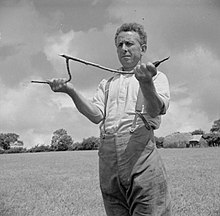
Recently, I had the privilege of joining Ed, a seasoned dowsing expert and retired excavating contractor with over 40 years of experience in septic installation and land work, as he walked me through his process for locating the best well sites.
What is Well Dowsing?
Well dowsing, sometimes called “water witching,” is the practice of using simple tools — often a forked stick or a pair of rods — to detect underground water movement. It’s been used for centuries across Europe, North America, and beyond, long before modern drilling technology.
While skeptics debate its scientific basis, experienced dowsers like Ed swear by its reliability. The principle is that moving water creates subtle energy fields that some people can detect physically through their tools.
How It Works
1. Understanding the Land and Restrictions
Before we began, Ed checked practical considerations — such as septic and drain field locations — because wells must be at least 100 feet from septic systems. The aim is to balance convenience (proximity to the home) with compliance and cost efficiency for running pipe and power.
2. Reading the Landscape
Nature offers clues. Ed observes vegetation — darker, olive-colored leaves often signal areas where underground water is moving and hydrating plant roots from below. Soil composition, rock types, and terrain also provide hints.
3. Detecting the “Area of Change”
The key to Ed’s method is finding what’s called an area of change — a zone where underground materials shift from solid rock to gravel, quartz, or fractured stone, allowing water to flow. Unlike narrow mineral veins (which often yield no water), these broader zones can be four to eight feet wide and carry a steady underground stream from higher elevations toward lower waterways.
Using a forked stick held loosely in both hands, Ed walks slowly across the land. When the stick tips downward, it signals the presence of an area of change.
Locating the Best Drill Spot
Ed’s goal is to find two crossing underground veins — a lateral and a bilateral — for a stronger water source. This increases the chance of hitting high-volume water at a shallower depth, saving drilling costs and improving water quality.
A good site might yield 10–20+ gallons per minute, compared to the 5 gallons per minute minimum for household use.
Energy Fields and Human Sensitivity
Some people are naturally more sensitive to underground energy fields. In the demonstration, a few participants (including me) could instantly feel the pull of the stick or rods, while others felt nothing at all. Ed says only about 5% of people can dowse successfully with a forked stick, while around 20% can use metal rods with moderate accuracy.
These energy fields can also affect human health. Ed shared striking real-life examples of people experiencing insomnia, fatigue, and even heart symptoms — all traced to sleeping or sitting directly over strong underground veins. Simply moving a bed or chair off the field often resolved the issues.
Why Dowsing Matters
Drilling a well is an investment — and a gamble if done without site selection. Dowsing isn’t 100% guaranteed, but in Ed’s decades of work, about 96–97% of his selected sites produced strong, reliable water. The few failures usually occurred in geologically difficult areas where even modern hydrogeology can struggle.
By combining site knowledge, natural observation, and traditional dowsing, landowners can:
- Increase the odds of finding abundant, clean water
- Avoid costly deep drilling into poor-producing zones
- Preserve land layout for septic, building, and irrigation needs
Keeping the Tradition Alive
Dowsing is both a skill and an art form — one that can be passed down, though not everyone can master it. Ed is now training his grandson to carry on the work, ensuring future generations can benefit from this age-old practice.
Final Site Selection
After walking the property, Ed identified two excellent well sites — a primary and a backup. Both offered strong potential, with the primary location near the planned home site and away from the septic field. These spots were marked for the driller to choose from, increasing the likelihood of a productive, cost-effective well.
Whether you believe in the mystical side or see it as an intuitive form of field science, well dowsing continues to be a valuable tool for rural property owners. It connects us to the land, honors traditional knowledge, and can save thousands in drilling costs — all while helping ensure the most essential resource on your property flows freely for years to come.
Learn More
If you’re buying land in Southern Oregon — whether it’s for a homestead, hobby farm, or simply your dream home site — I can help you navigate everything from well siting to septic requirements and land use considerations. Let’s make sure your property has the resources it needs to thrive.
Contact me today to start your search or to get expert guidance on rural property ownership.
Shauna Mayfield – Southern Oregon Realtor®
Licensed in Oregon #201258800
(541) 250-0233
shauna.mayfield@exprealty.com
Subscribe to my email newsletter so you’ll be the first to get these updates delivered straight to your inbox.
While you’re at it, check out my YouTube channel: Rooted Estate Southern Oregon on YouTube
It’s still a young seedling, but I’m planting the roots for something that will grow into a valuable resource—market statistics, current listings I’m representing, and video tours of local points of interest throughout our beautiful corner of Southern Oregon. If that sounds like something you’d love to follow along with, I’d be honored to have you subscribe and be part of its growth from the very beginning.


 Shauna Mayfield