
Most small acreage asks you to start from scratch. You buy the land, then spend five years and a lot of money building the things that make it work.
This one is already built. A two-story barn from 1909. A greenhouse and a potting shed. Three chicken coops. A stone cold-storage house. RV hookups with power, water and septic. Someone spent decades turning 1.23 level, fenced acres into a working homestead property, and it is all still standing.
1018 Thompson Creek Road sits in Selma, in southern Josephine County, with Thompson Creek running seasonally along the back edge and forest and mountains filling the view. So the question here isn’t what you’d have to build. It’s what you’d do first with what’s already there.
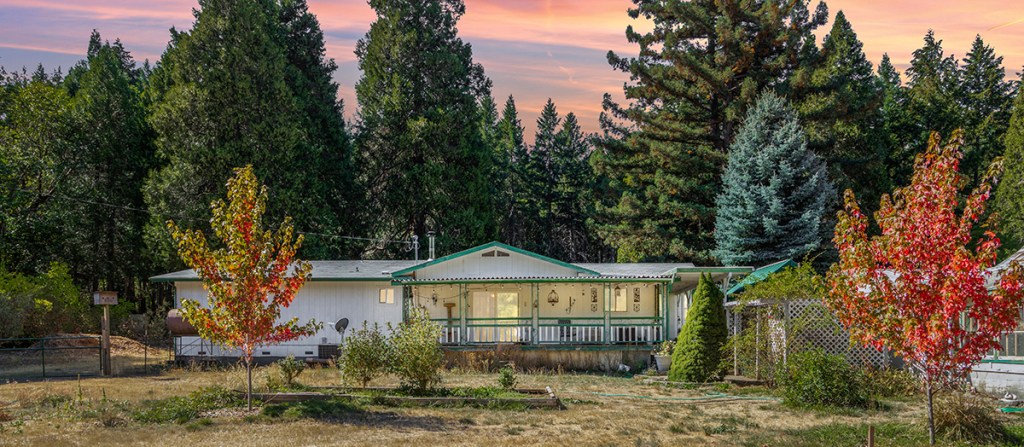
Level, Fenced and Already Working
The ground here is level and fenced, which matters more than acreage does on a property this size. There’s no slope to fight, no clearing to do before you can put in a garden or run poultry. A tall redwood stands near the entrance, and mature trees throw shade across the open ground through the summer.
At 1.23 acres, this is land you can actually keep up with. Big enough for chickens, a real garden, a workshop and somewhere to park the RV. Small enough that a weekend won’t disappear into mowing.
A Seasonal Creek Along the Back
Thompson Creek borders the rear of the property. It runs seasonally, strong through spring and early summer, then quieting as the dry months come on. That’s typical of creeks across this part of Southern Oregon, and it’s worth understanding as a feature of the land rather than a year-round water supply.
The 1909 Barn
The barn is the piece people remember. Two stories, built in 1909, with a concrete floor, a garage bay, workbenches already in place and the interior divided into separate spaces. A 14-by-36-foot addition runs along the back.
Concrete and workbenches are what separate a usable barn from a picturesque one. This is a building you can run a shop out of, store equipment in, or fill with whatever the project of the moment turns out to be.
Everything Else That Came With It
Past the barn, the list keeps going: a three-stall outbuilding, a 28-by-17-foot RV cover, a well house, a stone cold-storage house, a greenhouse, a potting shed and three chicken coops. RV hookups bring electric, water and septic to one spot, which makes room for a visiting rig or a project trailer.
Each of these would cost real money and real permitting time to add from scratch. Here they’re part of the purchase.
Inside the House
The home is about 2,001 square feet, single level, built in 1975 and added onto over the years. The primary suite has a double vanity, a large closet and a new low-step shower. A second large bedroom, an office or loft space, and flexible living and dining areas fill out the plan, with three bathrooms in all.
The kitchen is a country kitchen in the useful sense: an island, a breakfast bar, a pantry and generous cabinetry. Built-in features, ceiling fans and double-pane windows run through the house. A mudroom catches the boots, which on a property with this many outbuildings is not a small thing.
For heat there’s a heat pump with forced air, plus wood for the cold stretches. Central air handles the summer. Water comes from a well on the property, and waste goes to a septic tank with a standard leach field.
What RR-5 Zoning Lets You Do Here
The property is zoned RR-5, Rural Residential. Under Josephine County’s rural residential code, barns, stables and coops are permitted outright as accessory buildings once there’s a dwelling on the lot, and agriculture and farm use are permitted as long as what you produce is produced on the property. Animals have to stay confined to the land, and buildings that house them must sit at least 35 feet from any property line. Fenced pasture is excluded from that setback.
Two honest notes. The RR-5 minimum lot size is 5 acres, so this 1.23-acre parcel is smaller than the current minimum: it’s a legal lot that you would not be able to divide. Commercial feedlots are prohibited in the zone, and indoor animal husbandry requires a conditional use permit and at least 5 acres. For anything beyond a household-scale operation, the county planning department is the place to confirm before you buy.
Water, and What a Well Legally Covers
This is the question we get most on homestead properties, so here is the plain answer. In Oregon, certain groundwater uses are exempt from needing a water right permit. According to the Oregon Water Resources Department, those exemptions cover household use up to 15,000 gallons a day, irrigation of up to half an acre of lawn or noncommercial garden, and stock watering.
Half an acre of garden irrigation on a 1.23-acre property is a generous allowance. Commercial-scale irrigation is a different matter and needs its own authorization. If your plans lean that direction, ask us and we’ll help you get the question in front of the right people before you write an offer.
Lake Selmac Down the Cross Street
The cross street here is Lakeshore Drive, which is the road that runs out to Lake Selmac. The Oregon Department of Fish and Wildlife calls it the largest standing waterbody in Josephine County, and says it produces trophy-sized largemouth bass. Catchable rainbow trout are heavily stocked from February through May, with crappie and bluegill through summer and fall. Bank access is plentiful, with a fishing pier and several dikes around the lake.
The Josephine County park on the lake covers about 300 acres, with camping loops, yurts, a horse camp with corrals, nature trails, disc golf and picnic shelters you can rent. Day use runs sunup to sundown with a parking fee. Grants Pass is roughly 18 miles northeast on Highway 199, with Cave Junction the other direction.
The Details: 1018 Thompson Creek Road, Selma, OR 97538
- Offered at $315,000
- MLS # 220190857
- 3 bedrooms, 3 baths, about 2,001 sq ft, single level
- Built 1975; 1.23 acres, level and fenced
- Zoned RR-5, Rural Residential, Josephine County
- Well; septic tank with standard leach field; electricity connected
- Heat pump with forced air, plus wood heat; central air
- 1909 two-story barn with concrete floor, garage bay, workbenches and a 14′ x 36′ addition
- Greenhouse, potting shed, stone cold-storage house, well house, three chicken coops, three-stall outbuilding, 28′ x 17′ RV cover
- RV hookups with electric, water and septic; RV access and parking
- Detached garage, carport and workshop space
- Seasonal Thompson Creek along the rear; creek, forest and mountain views
- Paved road access
- Annual taxes $1,515.28 (2023)
Questions to Ask Yourself
- Which building would you use first: the barn as a shop, or the greenhouse as a growing season that starts in February?
- How much ground do you genuinely want to maintain? An acre and a quarter is a different commitment from ten.
- Do you want infrastructure already standing, or would you rather build it the way you’d design it?
- Does a seasonal creek read as a feature, or were you counting on year-round water?
Frequently Asked Questions
Is there a homestead property for sale in Selma, Oregon right now?
Yes. 1018 Thompson Creek Road is 1.23 fenced acres with a 2,001 sq ft home, a 1909 barn, a greenhouse, three chicken coops and RV hookups, listed by China Rose and Shauna Mayfield with eXp Realty. The current price and MLS number are in the details above.
Does Thompson Creek run year-round?
No. It’s a seasonal creek, flowing strongly through spring and early summer, then tapering through the dry months.
Can you keep chickens or livestock on RR-5 land in Josephine County?
Agriculture and farm use are permitted outright in the rural residential zone, with animals confined to the property and animal buildings set back at least 35 feet from any property line. Commercial feedlots are prohibited, and indoor animal husbandry is a conditional use needing at least 5 acres. The county code has the full list.
How much can you irrigate from a well in Oregon without a water right?
Oregon’s exempt groundwater uses include up to half an acre of lawn or noncommercial garden irrigation, household use up to 15,000 gallons a day, and stock watering. Anything beyond that needs a water use authorization. The Oregon Water Resources Department publishes the limits.
Can this parcel be divided?
No. The RR-5 zone has a 5-acre minimum lot size, and this parcel is 1.23 acres, so it’s a legal lot that cannot be split further.
Come See What’s Already Standing
Photos can show you the barn. They can’t show you how solid it feels, or how the light falls across the open ground in the late afternoon. Book a private tour with Shauna or call China, and we’ll go building by building and talk through how you could make this place your own.
Warmly,
China Rose & Shauna Mayfield
Rooted in Southern Oregon — Grounded in Results
Book a call with us


Get the monthly market update
Local market trends and featured properties, delivered to your inbox.



One Comment Add yours